
No one likes a tale of woe, quilters most of all. For those who have experienced it, there is nothing like that heart-stopping moment when you find that your quilt has been mistreated by the person who was supposed to love it and bring it to life. Today we learn from the experience of a friend who is currently damned to the hell of skinning two quilts that were very badly done.

Now, let me be clear that there is a far margin between a botched quilt job and just not liking the way a quilter who was let to “quilt as desired” has chosen to quilt a quilt, but at a certain point calling out bad work is necessary, and learning from it is helpful to the quilting community as a whole.
In Longarm Quilting there are a whole bunch of choices to be made for each quilt: pattern, quilt piecing, thread color, stitch length, density, and batting come to mind. Each of these choices has a parameter of viable choice depending on the quilt, the quilter, and the price point. (Yeah, you get what you pay for does often ring true here.)
Some quilts are better candidates for some techniques than others and understanding these things can help you and your quilter make choices about how to quilt your beloved quilt top. This and honest communication are very important when it comes to the outcome of your quilt. As the quilt top maker, it behooves you to become knowledgeable about the quilting process in order to be an informed consumer.

AND SO IT BEGINS –
When you first work with a new longarm quilter, there are questions you need answered. I also STRONGLY suggest that the first time you use a new service that you send them a “test project” and not the quilt top you hope to enter into a competition or have as a family heirloom. Trust me on this.
THE PIECING PART OF THE PUZZLE –
Good or at at least passable piecing skills are a must to create a flat, easy to quilt top. A skilled quilter can work with some quirks, but the better the top you give to your quilter, the overall better chance you have at great results. In the case of the piecer at hand, she did a great job with her piecing, and the fault lies with the quilter.
Of course, there are quilting circumstances that can make some tops harder to quilt than others, such as large bias blocks or what I like to call “confluxed” quilt design – where lots of fabrics come together at one point leaving a lump/bump no matter how skilled the piecer. So where you might have wanted one type of design, it is possible that a more flexible and forgiving all-over design that can avoid these bumps is a better choice for your quilt. It might be something the quilter will only find out after he/she gets your quilt up on the machine. Again, this is where good communication and trust with your quilter is VERY important.
BATTING-
What sort of batting will your quilter be using on your quilt? Will you bring your own or will you be buying it from them? If getting it from them, ask to see the exact batting they will be using and confirm it is the type you want, no matter what type. I am going to make the assumption that you don’t want crappy “see-through” poly and that might be just what you get if you don’t ask!
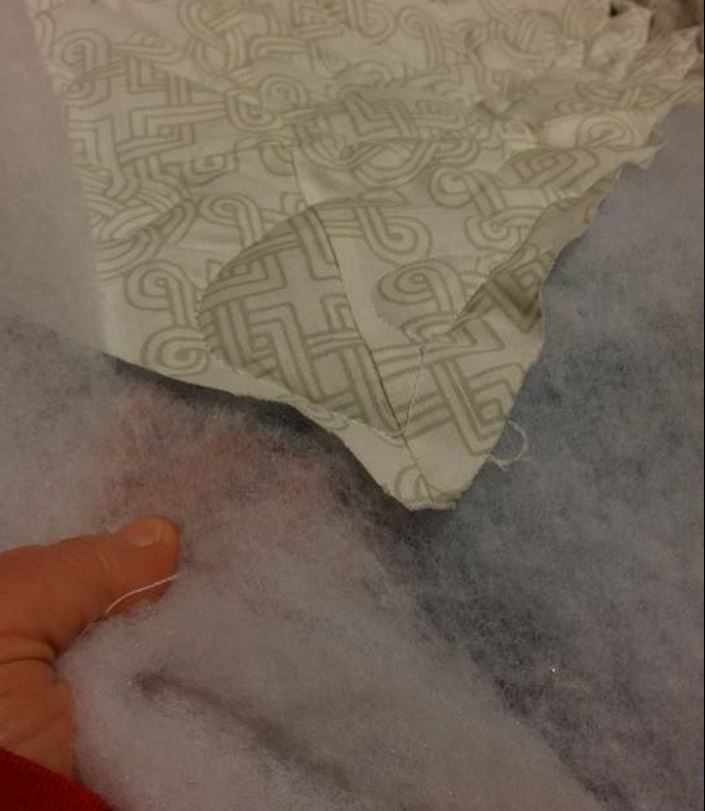
Crappy batting anyone??
STITCH LENGTH –
Long or short, stitch length is variable to some degree in quilting depending on the look that you want in the finished quilt. I tend to like a bit more thread on my quilts so will go with a bit longer stitch length when doing more open work but I think we can all agree that stitches that you can slide your whole hand under are a bit excessive and not in keeping with a quality job.
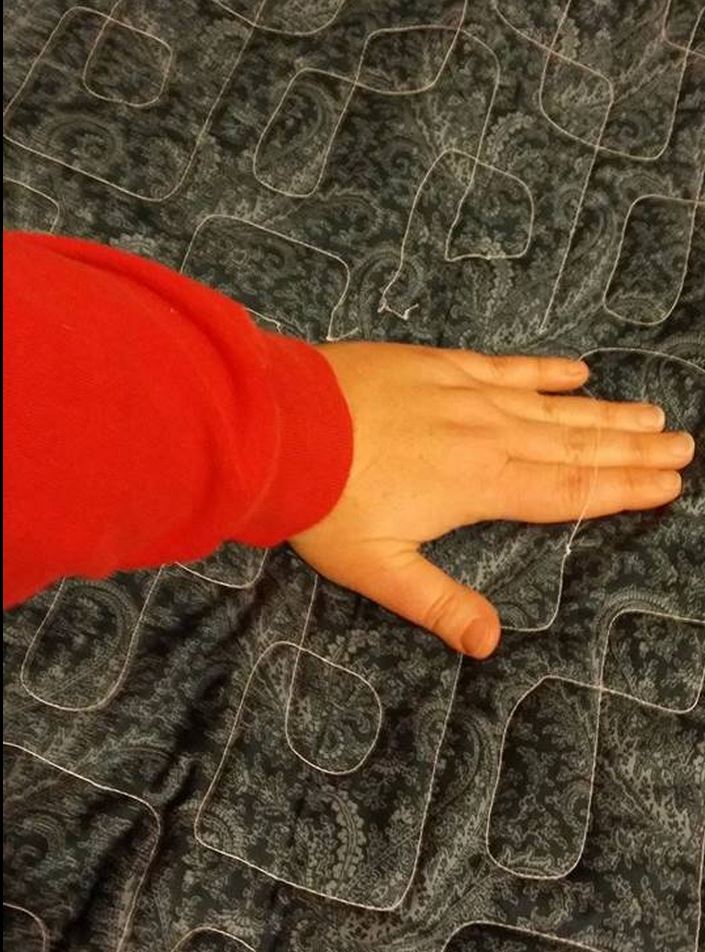
Yeah, let’s just say no to this…mkay?
SKILL –
How long has your longarmer been in business? Can you see examples of their work? Are they a hand-guided or a pantograph person? Do they have the skill to keep things on track and be smooth with their design (hint, the work shown above sucks). Each longarmer has certain things they are good at. Some are great at a simple all-over and pitiful at ornate custom work. Others use the power of a computer to guide their machines and do not excel at hand guided work. All of this to say is that your quilt is not the place for the quilter to practice a new technique (that is what charity quilts are for), and don’t ask your quilter to do something out of their comfort zone. Past that, see samples of their work!
KNOTS ARE NOT NORMAL –
Yes, there are places that starts and stops are necessary in quilting but there are multiple ways that they can be worked in and not leave lumps on the back of your quilt. Knots are an indication of poor work, thread breakage and more. That said, knots are not to be confused with occasional tiny loops which can happen sometimes and will even out when the thread tension adjusts after the first washing and drying. Thread boogers in all their glory (below).
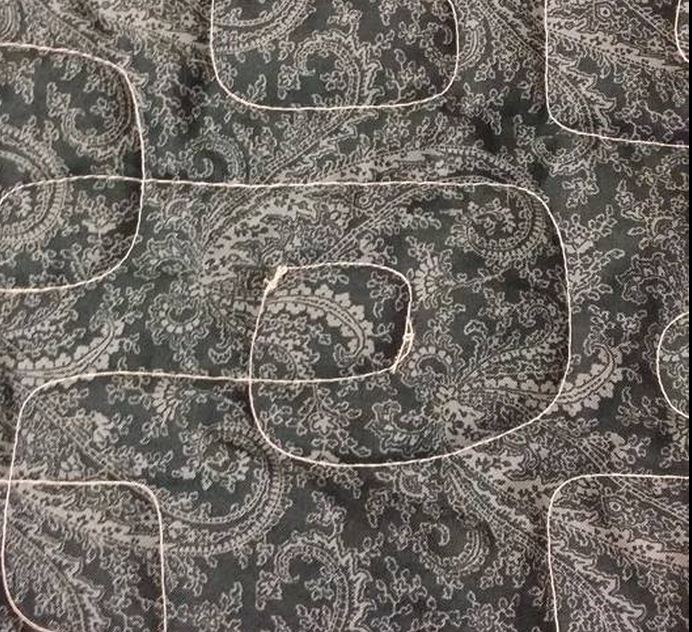
Hot knot mess
THREAD: CRITICAL AND TRICKY-
What thread is your quilter using? Make sure you see and know not only what color you are getting but the brand and the content. While we can sit and toss around the topic all day, I am going to be bold and say that there are some really crappy brands of longarming thread out there, and using them accounts for a lot of headaches in the quilting world, but they are cheap and some longarmers use them. Ask what they will use and expect to hear that they are using a quality brand like Fil-Tec, Superior, or another name brand. And while putting myself out there I will say don’t get your panties in a wad if your quilter suggests a cotton wrapped poly – in a good brand it is great thread and without a burn test you will not be able to tell it from 100% cotton.
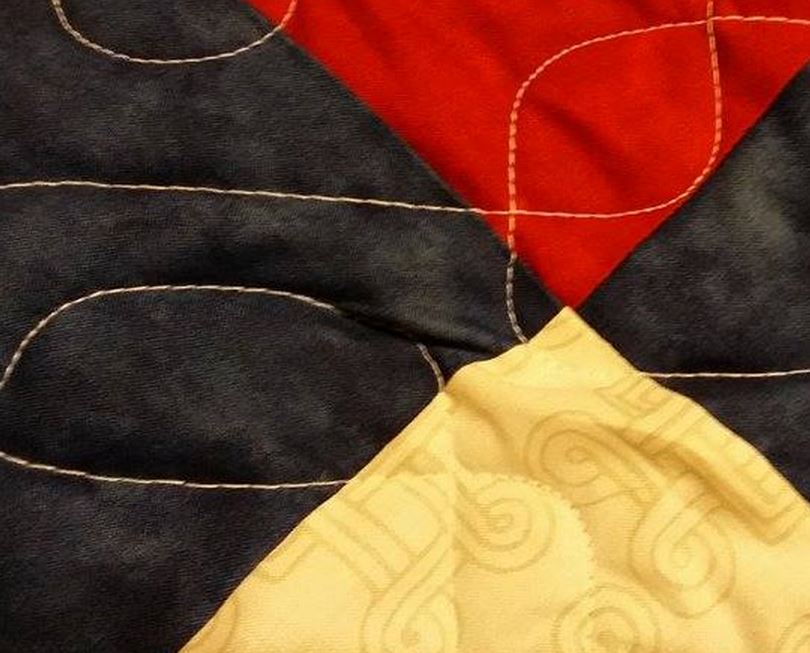
Craptastic is as craptastic does
TAKE AWAY MESSAGE –
Quilting is an art and like any other art there are those who are very good at what they do and there are those who’s lack of skill and business ethics damage the industry with each quilt they give back to customer looking like this. With the growing sales in the longarm market, many overnight quilting businesses have been born with quilters who are desperate to cover the monthly payment on their machine with whatever work they can scratch up, even when they don’t have the skills to back up being in business. On the flip side, are the slap and stitch shops who churn out amazing numbers of quilts with unheard of low prices that can be credited to cheap batting, crappy backing, and hack quilting ability.
Of course there are many ethical, talented, amazing folks out there who are quilting, charging a fair living wage, and using quality supplies. These are the quilters you are looking for and might have to wait for since many have a wait list for this very reason.
Screwing up a quilt happens sometimes. I myself have miscommunicated with a client about what they wanted and disappointed their expectations, and in that case I ate the whole cost of quilting and batting – mistakes happen and it is a gut punch lesson I remember to this day.
You and your quilter are partners in making your vision a reality; making sure you pick the right person is critical to the long-term success of your quilty union, as well as to the longevity of your quilt. Choose wisely.
YOUR TURN-
Do you have a tale of woe to share? Let’s hear it and talk about how things could have been made better. If you have a photo to share send it to me and I will see what I can do about getting it posted up.

I am a new longarm quilter. I started about a year ago and after spending hundreds of hours and hundreds and hundreds of dollars, I have my first customer quilt on the frame. I am doing a simple pantograph, and lo and behold, the spacing on the last row I did was not good, so there is overlap of the motif, it’s about a half inch off so in some areas, the lines cross. So, I am ripping it out. Oy! I want my first quilt to a customer to be perfect. (Any hints on how to rip out quilting without going blind or batty?)
I am completely committed to making a great business out of this, I love it. I don’t have a mentor (and I wish I had one!!), and I am primarily self-taught (took several expensive workshops with great teachers and learned a lot). I did not buy a terribly expensive machine to start out with. I don’t have a computer for my LA. My goal is to put out the best possible service I am capable of and with time, build up a comfortable and satisfying business.
I will take to heart all the hard earned lessons noted above, especially about communication between customer and me, the LA professional. This has been a great thread to read.
I have got to say most of the comments are about bad longarm quilters – but as a longarm quilter with 10 years and about 2000 quilts under my belt …..
*90% of the quilt tops are not square that I receive
*90% of the quilt tops have wavy borders – half can be worked in with a little care, but the other half require pleats and tucks that sometimes can be unobtrusively worked in but sometimes NOT
*99% of my clientele are thrilled with what I manage to pull off
*but that 1% that complains, complains to everyone – the local guild, blogs, etc. and never accepts that their quilt were less than perfect to begin with. And someone who is a a good longarm quilter gets a bad rap.
In 10 years I’ve lost 5 clients – all 5 were due to communication issues.
#1 had a black quilt with bright colored appliqués. The backing however was a tan batik. She requested tan thread for the back & black for the top. Twice I tried to explain that there was a possibility of the tan thread showing on top & the black on the back. She still insisted – and then when she got the quilt was upset with how it looked. Lesson learned – put it in writing.
#2/#3 I was leaving town. I was extra nice to this client – meeting her at her home as she was an older lady. She was in a hurry for the quilt didn’t want to wait until I got back, so I got it done before leaving town. I called and left her a message I would be by. Went by – she wasn’t home so I left the quilt on a bench at the front door. Found out a week later from #3 (who I had also left a message with- that I was leaving the quilts) that #2 had left town and that their quilts got wet. I never heard from #2. Lesson learned – don’t deliver to client’s home anymore.
#4 complained of a pin in her quilt. I only put pins in the top & bottom edges of the backing which is rolled a couple of times to smooth out and make sure its rolled evenly. She does piece her batting which is where I suspect it came from but she insisted I put it there. Lesson learned – inspect the quilt top, the batting, the backing more thoroughly.
#5 most recently – had seen a fancier quilt I had done. She delivered an oversize king with issues. It was 3 columns of strips with extra wide sashing and borders (over 18″ wide border) and a pieced backing with a single column of strips. All solids. She basically told me to do what I thought best for the quilt – no input about who it might be for(boy or girl), no suggestions for designs, etc. So I did a simple spacious (2-3″ spacing) of meandering to help tame the issues. It resulted in some pleats & tucks on the backing and top that I could not avoid. First she complained about the design, then she went to the guild and complained about how unprofessional it looked. She had wanted a much denser & fancy design – which would have resulted in even more tucks & puffs throughout the quilt. I try to find a lesson in incidents like this but this one is alluding me – my mentor would tell me to have returned it unquilted. Most of the quilts I do, my mentor would not do. But that’s my expertise – I am good at turning problem quilts into something better and 99% of my clientele know it & appreciate it.
Due to life right now – getting ready to move my mother in, taking care of a grandson, husband with Parkinson ……. and the fact that I don’t need the income I’ve actually come to the decision to not accept any new clients unless they come with a very good referral from one of my regulars. Maybe that’s the lesson learned – be careful of who I accept as a client.
I used to use a gal/friend, but the last time when she screwed up a wedding gift I threw in the towel. She would do great on things not really important, but every time I gave her a Special Quilt, she had issues. The wedding Quilt, set on point, was “ripped out” twice THEN called me. I ended up having a guild member help me straighten it out to finish. I had one qift quilt returned beautifully quilted, BUT reeking of cigarette smoke. Haven’t taken any work back to that one. I agree.. you get what you pay for. I thankfully have a friend who has a LA for rent really cheap. SO any problems are truly MINE to claim and I bring my own batting too. However, when I make a really great quilt I pay a pro with a computerized LA to do the job. I have a really great gal, and am more than happy to pay her price. When I’m making an heirloom it’s expected to last a long time. LA takes some time as well. Having learned to do it on my friends machine, I have found that the quilting is easier IF I’ve loaded the quilt correctly. That is the hardest part for me.. getting it on straight and true. THAT takes time. LA for the most part do pretty darn good work.
I had a friend who fought his way valiantly over 3 long days of ripping through a bargello Christmas tree and completed it beautifully. he had a friend long arm it for him….simple all over stipple quilting was what he asked for. she embroidered ornaments on it!!! without consulting him!!!
he had antique earrings he was going to put on it to display them.
oh. my. gosh. THANK YOU!!! yes, yes and yes, once again. the only thing i would have to say is that hand-guided and pantograph CAN be the same thing (hand-guided pantograph vs computer guided pantograph) where as pantograph and all-over free-hand are two different things (which is what i think you were getting at). this is, though a very minor point in everything i can’t help but agree with.
i saw a quilt that had been sent to a hand quilting group . It was beautiful intricate appliqué. The group marked it with ball point ink! Eek! Obviously they knew nothing.
I have given 3 quilts to longarmers. And had problems with all 3. When I got the quilts home, in 2 cases it was so bad that took it all out – wrinkles on the back and top. I then quilted these by hand and it all laid flat and no wrinkles. Why does this happen? If I can get it to lay flat to hand quilt, why does a longarmer have a problem?
You make some good points here, Maddie. While there is still a level of trust in committing your work to another’s hands, and there are times we can’t fairly expect miracles, there is also an expectation of fair value. Shoddy workmanship is shoddy workmanship.
If I went to the store to buy milk and found out it was a jug of spoiled cottage cheese, I’d be well within my rights to return it for what I expected, right? Ditto for quilting.
Education and communication are key!
Maddie,
While I see the gamut of piecing issues, I just cannot imagine any of the piecers I know paying for or accepting this level of crap. This is worse than I remember my maiden run on my Fusion looking. Those bringing and paying for professional quilting need educating that it is OK to have a standard of what is or is not acceptable. Demand that the quilter remove the stitching (if you trust them with a seam ripper!). Contact the Better Business Bureau. Do what is needed so that another person doesn’t have to suffer. Not all quilters have tremendous design creativity, but most are more than capable at providing a cohesive, well-executed quilting scheme. This is very sad to see, as it reflects poorly on all of us.
As for quilting for the piecing-challenged…We all have those piecers that don’t piece neatly, flatly or follow all of the rules we would appreciate. I try to educate each one with one bit of advice each time a quilt goes home. In the end, I have to rationalize that this is their work, and they must be generally happy with it. Sloppy and inaccurate piecing makes executing a custom quilting design more challenging, but if the client is ok with their work, then it is fair to assume that they’ll only be happier when it is quilted. It makes you appreciate the well pieced work that much more.
As a professional longarm quilter for over ten years with multiple awards to my credit, I would like to make a few points. 1) Never begin a quilt without an agreed upon price quote. 2) I have always required the quiltmaker provide their own desired batting, so no surprises. 3) Communication is key here. I want to know what you envision my quilting on your piece. Style, density and thread color must be discussed. 4) If you wish me to “go for it” I will provide sketches to help you see my plan. 5) There will always be good and bad artists out there. Do your homework! Know who you are hiring.
I had the worst experience with {Name removed}…
She had indicated that she would be interested in possibly collaborating with me when she saw my quilt.
Great..I had seen her work and loved the detail she did..this quilt was a complex New York Beauty..Karen Stones Cinco de Mayo pattern.
I handed her the quilt in Houston Oct 2013,she said she would get back to me in the new year ..I emailed and she finally responded mid January..with excuses..Beginning of June she emails telling me she,s ready to quilt it wanted credit card info as she decided not to collaborate..
She never discussed type of quilting,batting,thread etc..repeated attempts to contact including voice mail were left un returned.
I could have given birth to a child in this time frame..the quilt itself was a labour of love and I was beyond panicked with her lack of communication..
She promised photos..which never happened..she just wanted payment..I felt my quilt was held hostage and had no choice to pay sight unseen..THANKFULLY I USED PAY PAL!!!!!
Then radio silence ,no photos still no shipping advice..by now I am shaming her on her FB page..when I learn she is leaving for a vacation..so I sent a message telling her how nice it must be to go away using the money the I had sent her..two other people contacted me via FB as they also had issues with paying her and not receiving their quilts!One person had two hand appliqued quilts that had been with her for 2 years..she would not return them,even after the person asked to have then returned un quilted…
Someone contacted a local person whom she “worked” with via FB in a message indicating that people were concerned she was ignoring repeated attempts of contact,that she had been paid for services etc..
That prompted her to respond to one person..after he filed a Pay Pal dispute..
I payed her June 9 2014..my quilt arrived squished in box with no signature required July 3 2014..
The other person,s applique quilts were shipped at the same time,after two years..they were also shipped no signature required and left on their front lawn..the quilts were so poorly quilted and squared off that I was told that there was not enough room for binding!!
My quilt also suffered form her quilting..it was distorted..the piano key border was wavy..there was stitching over the black and white stripe inner border,thread nests,over and under quilted in the quickest way possible..
I sent photos to 3 well known professional quilters looking for advice..they all responded and were generous with their advice and suggestions..I took it to two local long armers and had their opinions,..I filed a Pay Pal dispute immediately after receiving my quilt for a partial refund,I changed it to a full refund dispute after consulting other professional quilters..
She never responded..I got my full refund..
I was encouraged to enter it in as many shows so people could see the work she did on my quilt…it,s on it,s way to Paducah…
Lesson learned..
I have never understood the desire to send a project to someone else for quilting…
Quilting is part of the process! It would be like a modeler, building the model but then sending it to someone else to paint it. Or a pianist playing 60% of a performance and then getting up and allowing someone else to finish it.
The whole idea is foreign to me. My machine limits what I can quilt at home, so I rent time on a long arm where I can do the quilting myself on a proper machine. Am I really good at it? No, but I wouldn’t dream of sending my work off to someone else to have it quilted.
Mind You, please, I am not criticizing those who do, I just couldn’t do it. Though I may make an exception at some point to have Angela Walters quilt one of my quilts, but that would only be because I admire her work so much that I would love to have some of it to look at daily.
The story above is one of the reasons I won’t use a “long armer”. Sure there are good ones out there, but my primary reason for not using one is, I feel like I need to do the whole process in order to claim it as “mine”. When asked, “Who did this?” I want the answer to be, “I did!”, not “I did this part and this part, but I hired so and so to do this other part…”.
“I did” is so much easier to understand…
Hey, Paul. I totally get where you’re coming from. But think of it this way: Sending your top out to a longarm quilter is not like only playing 60% of a piano concerto and letting someone else do the rest. It’s more like a duet between a pianist and a violinist. When both musicians are masters of their instruments and they work well together, a beautiful collaboration results that is more than, or at least different than, what each artist could produce alone. And really, unless you are hand dying your own fabrics and avoiding commercial prints and batiks entirely, even a quilt that you have pieced and quilted yourself is still a collaboration with the fabric designer. Think Kaffe Fassett or Tula Pink and you know what I mean — their fabrics are so amazing that they have a huge impact on any project they are used in. There are other collaborative arts as well — theatre, film, symphony, interior design, architecture… Children’s picture books are usually a collaboration between a writer and an illustrator. The list goes on and on. And you know, that collaborative element is one of the things I love about quilting. I love taking these gorgeous fabrics that someone else designed, combining them with someone else’s beautiful fabrics, using them in pieced or appliqued blocks that someone else came up with once upon a time, and creating something fresh and new that is my own, but that connects me somehow with the creativity of others whom I’ve never even met. I may be using a technique that someone else came up with, or a specialty ruler that someone else invented. I may be inspired by someone else’s color palette on a completely different quilt, or by someone else’s quilting pattern. Personally, like you, I enjoy the entire process of quiltmaking from start to finish. But not everyone has a longarm machine available to rent locally, and it is very difficult to successfully quilt large quilts on a domestic machine. Some people’s bodies just aren’t physically able to machine quilt. Then there are others who send their tops out to be quilted so they can devote all of their time to painstaking applique masterpieces, or so they can devote the time to hand quilting some of their projects. I think the way to ensure that the finished quilt feels like it is genuinely your own work is to have a match between the amount of work that you put in and the amount of work put in by the longarm quilter, if you send it out for professional quilting. If you sew a couple of big squares onto a white background for a modern quilt and then hire an amazing longarm quilter to create an elaborate custom quilting design that really makes the quilt, that’s the kind of situation where it feels dishonest to take credit as a maker. But if it’s a simple quilt top with simple allover quilting, or an elaborate hand stitched applique quilt with custom quilting, then I think you can still say “I made it.”
Excellent article. I’ve been quilting for others for 12+ years, first doing it freehand and after a few years I switched to a computerized system. I once put the wrong design (an allover) on a customer’s quilt. The two designs were very similar and both looked great for the quilt. My customer called and I tore up her check. I’ve also missed a block or two while working and had customers bring it back so I can correct it. I once emailed a customer to tell her I was having tension issues but would get it done as soon as I got the problem corrected. She misread the email and thought I meant I was tense. My point is that we are all human and it’s very important to find a quilter you can work with well. I’ve had quilts that should have been tossed in the trash but the owner really wanted them done. So I do my best even knowing it will be the only time she’ll need a quilter. I work for elderly ladies whose eyesight isn’t the best but I quilt it as though it’s perfect. I’m not going to lie, my favorite customers make nearly perfect quilts but I enjoy newbies as well. To have someone look at their quilt and love it more is a great feeling. If you are unhappy with anyone’s work, call or email them. Give us a chance to fix our mistakes. If that particular quilter won’t correct it, move on to someone else. I know there are a couple ladies out there who will never hire me again and I’m good with that. There are a couple ladies out there I will always be too busy to work for again. I intend to take a couple of the suggestions from this post to use on my intake forms to help my customers make more informed choices. Thanks again for a very good read.
Hmmmm…this could be why I don’ t own a longarm…would need to do others to qualify the expense and have no desire to work on others quilts…it is worth the effort of trial tops to find the good quilter in your area!
Excellent article. I have been a professional longarmer for just over 10 years and I am sometimes shocked to see the kind of quilting that some people are paying a “professional” for. It’s one thing to be not-ready-for-prime-time but another to be just down right amateurish and careless. It makes us all look bad.
I was at a small quilt show out of town recently and there were several quilts done by one longarmer in the area. They were appalling. Her e2e work was okay, but the freehand custom was just awful. Even my husband was taken aback.
In my area I have seen several longarmers come and go over the years. I am guessing they thought they could just buy a machine and start making $. Of course some of the fault goes to machine dealers who tell them that, but skip the part about developing the skills. Hell, I am still developing my skills, learning new techniques and design! It’s part of the fun 🙂
Terry, you raise a great point. When it comes to free motion quilting, a long arm machine is just like a pen in the hand of an artist… or a pen in the hand of someone who can’t draw to save her soul! Yet the long arm manufacturers, dealers, and reps, and all of their marketing materials, work hard to create the impression that ANYONE can do this well as long as they buy the best machine. And drawing — and free motion quilting — are not talents that everyone possesses. There’s the issue of developing the skills to use the machine, but beyond that, some people are just more gifted at drawing with thread than others, and the free motion, hand guided quilts are where that difference really comes to light.
Loved this article. I play with a wonderful group of women and most who do not do their own quilting use the services of two or three of our ladies to do quilting professionally. Several of us have our own longarms and do our own quilting (free motion or computer guided). I do my own quilting for the very reasons you stated in your article. If I screw up my free motion quilting, it’s on ME and no one else. I put a lot of work into my tops, designing as well as piecing, and then decide how I want to custom quilt each element of the design. I would much rather quilt it myself than have unnecessary stress of being unhappy and financially poorer from having someone else do it. I readily admit that I am not yet what I would consider an accomplished quilter and have spent many hours picking out a bad section and re-quilting it. But when asked if I quilt for others, I smile and tell them no. Much as I’d love to, I don’t feel I have the confidence level or skill to risk taking on someone else’s work.
I sent a quilt away to a longarm quilter that my friends and I have been using for a long time. This quilt top was very special to me – it was the last quilt that my Mom was working on when she passed away. I waited a very long time before I decided to get it quilted. I filled out the form with specific instructions, and waited to get my quilt back. To make a long story short, she did not pay attention to my request for thread. And, more importantly, she was having problems with her machine, she knew it, and continued to finish my quilt anyway. When I wrote to her, and included pictures of some of the problem areas across the whole quilt, she called me and left a very unprofessional message on my answering machine. At one point, she admitted that she knew she was having problems. She told me to send the quilt back, and she would re-do it. I can only imagine what a mess that would be! I will never send her another quilt! I do use the quilt, but my heart breaks a little when I look at it.
If a long-armer in Portland ever botched a quilt as badly as the one in the blog, I’m sure one of two things would happen. Either the quilter would go out of business, or more likely, a more experienced quilter would mentor the new quilter. There is such a high demand for long-arming services in Portland, newcomers are more than welcome, and there’s a lot of mentoring going on all the time. The newcomers who are really serious about doing well are the ones who seek out mentors.
Wow… I wish it was that way around here. No one wants to give you help around here. Some shops will rent time on their longarm but they will not give instruction as then they are “training their competition” and yes… I have literally heard them say that. I got my longarm in August and I’m still a beginner – I am learning as much as I can online and through books. I have done some customer quilts, but only very simple designs – I am appalled by the job done in the photos on the blog. If I end up with a blip or something goes wonky I pick out til it’s back at a good place and tie off and bury and then start again. My starts and stops and fairly undetectable because I always tie off and bury. I can’t imagine sending something like whats is in those photos back to a customer.
Wow, I was shocked at this, although why not bad quilters. I guess there are some bad ones in every business. I have a great long arm quilter. I don’t use her, except for large quilts which I have trouble with on my machine. I got her name from my LQS and saw and heard about her work before I ever took one to her. You are right, you get what you pay for. It’s worth it.
Unfortunate all the way around. Quite apparent the LA quilter was very inexperienced. This and it’s sister pattern is one of the most popular patterns my clients choose for their modern quilts right now, done right it looks terrific. Surprisingly though due to the straight lines this pattern is one that could be very difficult to execute for a newbie, but lots of newbies are offering it, just look on pinterest I’ve seen lots of quilts with this pattern shown there and some don’t look much better than this job.
Great article Maddie, will pass it on.
A few years ago, I took a very special quilt to a longarm quilter that I had previously used for two other quilts, Normally I did them myself, but since this was special, I figured I would pay the extra money and have her quilt it for me. We sat down in her shop & I told her I wanted a very simplistic quilting pattern because the quilt top had a geometric pattern, and I wanted thread to match, front and back. (the top had 3 main colors in fairly large sections–the back was a single color) She told me it wouldn’t be any trouble, quoted me a price and although it was more than I usually spend, I agreed–this was a special gift. She said it would be ready by the date I needed it and I left. A few weeks later I went back and picked it up. It was just at closing time, and she had it all wrapped up, so I paid her and took it home. I knew I had to get it in the mail, so I hurried and unwrapped it when I got home and was absolutely shocked! Instead of the simple lines in the center and the ‘graph-like’ design in the triangular corners, there were scrolls and leaves and flowers–all kinds of shit–instead of white thread on white fabric, etc. there was all one color–the same as the backing! The whole quilt was (pardon the language) totally fucked up, and I didn’t have time to take it back and have it re-done! It’s like she had my quilt and someone else’s orders.
I’ve not returned to her, and if anyone asks, I’ll tell them of my experience with her and let them make up their own minds. I’m damned near 70 now, and she’s not worth my energy to stress over. I now have a wonderful lady to do all my quilting for me–she does a beautiful job–charges a fraction of what the other one did, and can actually follow instructions to a ‘T’. She’s PRICELESS!!
And thanks Maddie, for the article . . . I was beginning to think I was the only one who had ever had such a problem.
I hate to say it, but it sounds like that was clearly a problem with miscommunication, i.e. the “requirements” for the project were not clearly communicated. Most people hear “simplistic pattern” and think something easy all over, not “specific geographic pattern to match the quilt”. And if you actually said “thread to match, front and back” then she gave you exactly what you asked for: matching thread on the front and back. I’m not trying to be argumentative, nor start a flame war, but just point out that people often say one thing while thinking they are saying something else entirely. That’s why it’s better to say EXACTLY what you want (i.e. “squares here and triangles here” instead of “simplistic pattern that doesn’t clash with the geometric top”, and “these three colors of thread on the top, to be used here, here, and here, and this specific color of thread on the back, all over” rather than “thread to match, front and back”.) It all comes down to accuracy in language to help avoid many, MANY misunderstandings…
I can understand your disappointment but I think you need to take your complaints TO THE QUILTER rather than sharing your disappointment with other people, at least until you have given the quilter an opportunity to hear your side and to fix the issues.
If the two of you cannot come to some sort of mutually agreeable resolution, THEN you might consider sharing your concerns with others.
I agree with points made by two other commenters. Lack of communication. Really, what does “matching thread” mean? Does it mean match the bobbin thread to the top thread? Match the bobbin thread to the backing fabric, and the top thread to the bobbin thread? Match the top thread to the fabric in each block, and the bobbin thread to the backing fabric? It could mean any of those things, and unless the quilter asks enough questions to clarify exactly what you mean, she has not done her job well.
I also agree with the commenter who said it sounds like she used someone else’s work order when working on your quilt.
I am very sorry that you are disappointed in the finished product. As a piecer myself, I understand the amount of time and effort that went into the quilt top.
As a quilter, the things that disturbs me most is the fact that you did not give the quilter an opportunity to make things right. Mistakes happen. An ethical business person will make an effort to fix those mistakes.
Please consider sharing your thoughts with the quilter. Even if it is too late to fix your particular situation, she can benefit from hearing comments. Perhaps she did, in fact, get someone else’s work order mixed up with your quilt. She needs to know that so she can change her work process to be sure it never happens again.
Hi Riley, just wanted to address your comment on BAQS in reference to a longarm quilting incident. I would like to be very clear that the incident was taken to the quilter and the resolution was not adequate in the least. Her actions and reactions to the situation were at best not professional and were much closer to unethical and deserved a call out. I am a longarm quilter as well and know that things happen but that is just not the case with this quilt. Longarming like every other service is a buyer beware sort of situation… knowing exactly what you are getting, getting it in writing and following up when things go wrong is all part of being the involved consumer. Hopefully everyone learned from this little debacle.
Hi Maddie,
My post of 5/17/15 was meant as a response to the post made by Pat H., not as a response to your situation. My apologies for not making myself clear on that point.
Although you did not achieve a satisfactory resolution to your situation, I am glad to know that you gave the quilter the opportunity to remedy things. I’m sorry it didn’t work out.
Great write up Maddie….I can’t imagine giving that back to a customer….I take pride in what I do and my wait time shows it. Not everyone can do this business….it takes practice, practice, practice. It is hard on your body and no one is going to get rich doing this. There is no machine on the market that will make you good just by purchasing it.
I am so sad for this gal and her quilts….shudder.
Thanks again for the article…..I’m going to share on my page.
Xoxox
Maddie, do you accept quilts from out of state to be quilted on the longarm?
Hi Jen, currently I am not doing any customer quilts. A few for books and special projects but overall I am too busy to do quilts the justice they deserve. Luckily there are AMAZING quilters out there.. if you need help finding one let me know and I will get you some names.
I am a professional Longarm quilter. I have been quilting for 16 years. I am 36….this industry has gone through a lot of changes. Not all good. Everyone starts some where… BUT What I just read and saw made me spit!
As a professional, (and a darn good one) the fact that your friends quilt came back like that, leaves my speechless!! Literally my jaw dropped! Why would you EVER give that back to someone?!?!
As a piecer, I feel so bad for her. It is never a nice feeling to be disappointed, but especially, in a craft where your heart is literally in your quilt…And that’s what this hobbie is for people. It’s important to them! It should be respected as such, especially from a longarmer who accepts that top into their possession! Double D’s or not. You take it on… You make it great!
I your friend needs a great quilter… Look me up:) BTW GREAT article!!!!
Great article! I am starting the process of getting a Longarm and wanting to start a business…
One of my biggest worries is client satisfaction. There are not many longarmers here in NZ, so it will be an interesting take.
Thank you for writing the article!
My mom sent a top out to a quilter recommended by a friend. The quilt came back with the top askew and hanging off the batting and back. There was no way to add to the backing to make it cover the backing, since it was at an angle to the top. Totally ruined. Mom did pay the quilter for materials, btw. I might not have been so kind.
I have clients that love when I get back from classes sand want to play. They get a lot of bang for their buck. Most of my clients don’t want to choose thread or design, as they trust me. But we do have discussions of its use, what they like and dislike, etc. I believe it is because they trust me and know I will never send home a quilt that I wouldn’t like the way it was done if it was mine. I am computerized, but also do freehand and custom. I also give tips and explain how to do things differently and several call and stop by for piecing advice also. Communication is key, if they bring me crapbatting we discuss it, I show why I despise and don’t like it, if they still want it they get it, but I get it in writing.
Boy. You are so right! Hindsight 20/20. I have not sent that many out but 2 of my best I did and both were nightmares.
The 1st I guess was just a communication glitch somehow- She asked was I going to use it on a bed and I said maybe once a year-it’s really a wall quilt and when I picked it up it was PUFFY batting!!! Oh I was so upset. I was a new quilter and I just took it home without saying anything and never went back. My neighbor told me to sell it to get rid of it and I have been trying to do so off and on without success.
The other was 1 I worked on for a few years off and on and I gave it to a local woman who normally does great stuff but when she brought it to me the quilting pattern was so spread out it was so not enough. We really I don’t think had discussed price prior but she had my phone # and email- she was a classmate in an ongoing class. I didn’t even take it out of the plastic bag she brought it in. I really was heartbroken and I think she knew it. I put it in a local show to be judged and all the comments were the same- not enough quilting. Now I have been unpicking the quilting which is tedious but I will stick with it and quilt it myself. The way the pattern was (is) I could not add anything around it that would make any sense. She had a lot of personal issues going on and shortly after stopped her longarm business entirely.
So what did I learn? I like a LOT of quilting on my quilts and if I send anything out I would need to communicate that. But I like doing it myself other than it takes forever. I am getting a Juki soon so that will be good. Love all your posts-you are great!
Maddie, this is one of the best articles I have read concerning what quilters should ask or look for in longarming. I plan to share it with a group that I belong to. Thank you!
Thank you Patty. I think that finding the right quilter is magic and worth finding.. knowing what you are looking for is the trick 🙂 I guess this is true in all parts of life!
I am a longarmer who owns a quilt shop. I have been doing it for over a year; longarming; the quilt shop has been four years on now. I do not use crappy batting unless forced to by cheap customers; you know the ones who do not believe in batting being of quality; same with their backs as we only buy the good backs. There is a quilter about 45 mins away who has a bunch of handi-quilters and family to run them; he does it for a half penny a square inch; BUT you get what he wants to put on it; cheap thread and all. I will not go that low as we are WAY underpaid as it is. Then you have the ones who cannot put on a straight border; the block rise up like a d-cup and a lot of the quilt top has openings where oops, I forgot to sew it, which will catch the foot as the machine passes by if I don’t fix it. I have ripped out things that I don’t like; as I want it to go out better than when it came in. I think in fairness, you should write an article from the flipside. I am now starting to look harder at what I quilt; as too many clients bring in junk and expect me to fix everything. If I had time to do that, I could make MY own quilt! And if you don’t make it perfect, it all the longarmers fault, never theirs. The breaking point for me was when a customer wanted me to longarm a tshirt quilt that was a ridiculous mess from the get go; her 20 yr old granddaughter wanted one made HER way; oh did I mention, she has NEVER sewn? The shirts were appliqued to the cheapest black flannels JoAnns has to offer with a very unbalanced zigzag on top of cheap flannel for the back with batting sandwiched inbetween! the “top” was not squared; and BTW I tried my best to talk her out of it and to do it the best way possible; but no! And after going through the first row; the second row shirt rose up off the quilt; I called her and told her what happened; she said just go around the rest of them. Did that. There was another big saggy area that I had to fold and stitch down to make it lie flat. She picked it up; went home; came back the next week complaining about it. I explained to her WHY this happens. She whined about it more and I told her I will NEVER EVER again take on such a mess. I will say that it looked better than when she gave it to me, but this woman who has never made a quilt wants to blame me because she can’t say no to a grandkid. Well now I say NO MORE! No more nice guy here. No matter how much I may need to make a payment on the machine; I will never again attempt anything like this. So what I am saying is, yes the threads looked bad on your example, but there are always two sides to every story; the truth lies somewhere in between.
Thanks for your thoughts Merrie. You are totally right that there are some quilt tops that are a hot mess and as quilters we have two choices. Do them and make them as good as we can and educate along the way or say no. I choose to say no to those that set off all the warning bells in my head. In the case of the quilt top in question.. it was dead on perfect so there was not a single excuse in this case, just a crappy quilter at work.
I encourage ALL quilters to stand up for quality and refuse to use crap batting, thread or technique since in the final equation reputations rest on the outcome and each quilt out there is no different from our business cards and some are just not worth having on names on! 🙂
The hardest word for a women to say is “no” but it is the most important word that an individual in the longarm trade needs to learn. “NO”